How to Find the Invoice Price of a Car
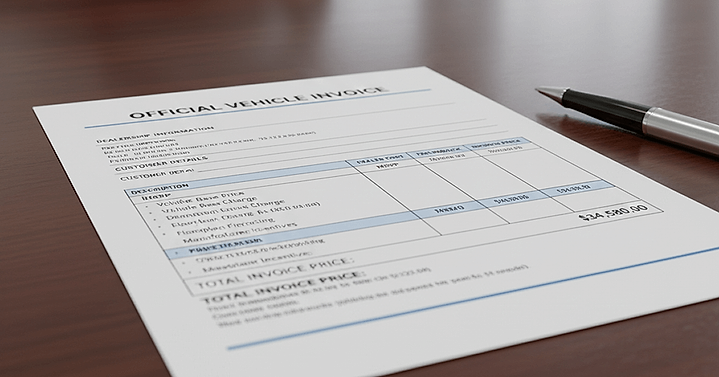
Last updated Sep 24th, 2026Knowing the invoice price of a car can give you useful context before you start comparing vehicle prices. While MSRP tells you the manufacturer's suggested retail price, the dealer invoice price represents the amount listed on the manufacturer's invoice to the dealership before certain incentives, credits, and other adjustments.
That makes invoice pricing a useful research point, but it is not necessarily the exact amount a dealer ultimately pays for a vehicle.
If you are researching a new car, you can use invoice pricing alongside MSRP, available incentives, and dealer offers to better understand the numbers behind the price.

Find Your Best Price
See what others paid and get upfront pricing from local dealers.

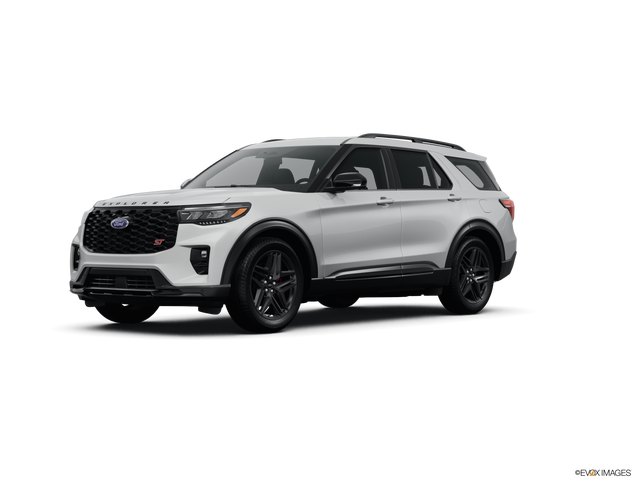
How to Find the Dealer Invoice Price of a New Car
There are several ways to research the dealer invoice price of a new car. The key is making sure you are comparing pricing for the correct year, make, model, trim, powertrain, and options.
Here is a simple way to approach it.
1. Identify the Exact Vehicle
Start with the specific vehicle you are considering.
Record its:
- Year
- Make
- Model
- Trim
- Powertrain
- Drivetrain
- Factory installed options
- Destination charge
Even vehicles with the same model name can have significantly different invoice prices depending on configuration.
If you are looking at a specific vehicle in dealer inventory, its VIN can make this process easier because the VIN identifies the exact vehicle rather than just the general model.
2. Look Up Invoice Pricing
Use an invoice pricing resource that lets you select the vehicle you are researching.
AutoFinder's invoice pricing tool can help you research vehicle pricing and connect with dealers for additional pricing information.
When reviewing an invoice price lookup, make sure you are comparing the same trim and equipment as the vehicle you actually want to buy. A base model invoice price will not be particularly useful if the vehicle on the lot has a higher trim level and thousands of dollars in factory options.
Once you know the vehicle you are interested in, you can also compare pricing from dealers in your area. Select your vehicle on AutoFinder's invoice pricing page, complete the form, and choose the dealers you want to hear from. Ask for a written price and what is included so you can compare offers more easily.
3. Compare Invoice Price With MSRP
Next, compare the invoice price with the vehicle's MSRP.
For example, imagine a vehicle has:
MSRP: $38,000
Estimated dealer invoice price: $35,500
The difference between those figures is $2,500.
That does not mean the dealer made $2,500 if the vehicle sells at MSRP. Manufacturer incentives, holdbacks, advertising fees, regional programs, financing arrangements, and other adjustments can affect the dealership's actual economics.
Think of invoice price as a reference point rather than a dealer profit calculator.
4. Check the Vehicle's Window Sticker
The window sticker can help you verify that you are researching the right configuration.
Look for the vehicle's MSRP, trim, factory installed options, packages, and destination charge.
If the vehicle you researched has different equipment than the one at the dealership, its invoice price may also be different.
5. Compare Actual Dealer Pricing
Invoice pricing becomes more useful when you compare it with real dealer offers.
Once you know the MSRP and estimated invoice price, request pricing for the specific vehicle you are considering. Comparing written prices can help you see how current offers relate to the pricing benchmarks you researched.
Focus on the complete price rather than one number alone. Taxes, registration costs and other applicable charges can affect what you ultimately pay.
What Is Dealer Invoice Price?
The dealer invoice price is the amount shown on the manufacturer's invoice for a vehicle sent to a dealership.
You may also see it called:
- Car invoice price
- New car invoice price
- Factory invoice price
- Dealer invoice
- Vehicle invoice price
These terms generally refer to the same pricing concept.
Dealer invoice price should not be confused with MSRP.
MSRP is the manufacturer's suggested retail price. Invoice price is the amount listed on the manufacturer's invoice to the dealer.
There is an important distinction, though. Dealer invoice price is not necessarily the dealer's final net cost.
Manufacturers and dealerships can have financial arrangements that are not reflected by the basic invoice figure. That is why claims about finding exactly what a dealer "really paid" should be treated cautiously.
For shoppers, invoice pricing is most useful as another benchmark for understanding a vehicle's pricing structure.
How Do You Get the Invoice Price of a Car?
To get the invoice price of a car, start by identifying the exact vehicle and then use an invoice pricing lookup that supports its year, make, model and trim.
For a general model, selecting the correct configuration may be enough.
For a specific vehicle already in inventory, use the VIN or stock number when possible. That reduces the chance of comparing your vehicle with a different configuration.
Once you have an estimated invoice price, compare it with the MSRP and dealer pricing. Those 3 numbers can give you a much clearer picture than looking at MSRP alone.
Can You Find Dealer Invoice Price by VIN?
A VIN can be extremely helpful when researching dealer invoice pricing because it identifies a specific vehicle.
The VIN can help determine details such as the vehicle's year, make, model and configuration. Those details can then be used to match the vehicle with applicable pricing information.
However, the VIN itself does not contain the dealer invoice price.
Think of the VIN as the identifier that helps you find the correct vehicle information, not a code containing the price the dealer paid.
If you found the vehicle on AutoFinder, save the listing and note the VIN or stock number. Share that information with the dealer and confirm the car is physically available before you visit.
Where Can You Find the VIN?
A vehicle's VIN is a unique 17 character identifier.
For vehicles listed online, the VIN is often included with the vehicle details.
On the vehicle itself, common locations include the driver's side dashboard near the windshield and the driver's side door jamb.
The VIN may also appear on documents associated with the vehicle.
When researching a particular car, copying the VIN directly from the listing or vehicle can help prevent mistakes.
Can You Look Up a Dealer Invoice Price for Free?
You may be able to find estimated invoice pricing without paying for a report, depending on the vehicle and the pricing resource you use.
The bigger consideration is whether the information matches the vehicle you are actually researching.
A generic invoice price for a model may not account for a different trim, powertrain or factory installed options.
That is why you should verify the vehicle configuration before relying on an invoice estimate.
What Is Included in a New Car Invoice Price?
A new car invoice can include several components.
The starting point is typically the vehicle's base invoice price. Factory installed options and packages can increase that amount. The invoice may also include destination or transportation charges and other manufacturer related charges.
The exact structure can vary by manufacturer and vehicle.
This is another reason comparing only the base invoice price can be misleading. A vehicle sitting at a dealership may have equipment that makes its actual invoice figure higher than the advertised base invoice for that model.
Is Destination Charge Included in Invoice Price?
Destination charges are typically associated with transporting a vehicle from the manufacturer to the dealership and are generally listed as part of the vehicle's pricing.
When comparing MSRP and invoice pricing, make sure you know whether the figures you are using include the destination charge.
Otherwise, you could accidentally compare one price that includes destination with another that does not.
Consistency matters more than simply finding the lowest number.
Is Dealer Invoice Price the Same as Dealer Cost?
Not necessarily.
This is one of the most important things to understand about invoice pricing.
The invoice gives you a useful vehicle pricing benchmark, but dealerships and manufacturers can have additional financial arrangements.
These can include manufacturer incentives, dealer programs, volume based incentives and other adjustments.
Because those arrangements can vary, an outside shopper generally cannot determine a dealership's exact net cost simply by looking at the published invoice price.
That does not make invoice pricing useless. It simply changes how you should use it.
Treat invoice price as a research benchmark, not proof of dealer profit.
Why Invoice Pricing Still Matters
If invoice price is not the dealer's exact cost, why look it up?
Because it gives you another point of comparison.
Imagine you only know that a vehicle has a $40,000 MSRP. Without additional information, you have very little context for evaluating the price.
Now imagine you know:
MSRP: $40,000
Estimated invoice price: $37,200
Dealer offer: $38,100
You now have multiple reference points for understanding where the offer sits.
That does not automatically tell you whether the offer is right for you. Availability, incentives, demand, vehicle configuration, financing and trade in value can all affect the overall transaction.
But you are making the comparison with more information.
Invoice Price vs. MSRP
Invoice price and MSRP answer 2 different questions.
MSRP tells you the retail price suggested by the manufacturer.
Invoice price tells you the amount listed on the manufacturer's invoice to the dealership before other possible financial adjustments.
The gap between them can provide useful pricing context.
Neither number should be viewed in isolation. The price a shopper can actually get may be above, below or between those figures depending on the vehicle and current market conditions.
Invoice Price vs. Out the Door Price
Invoice price and out the door price are also very different.
Invoice price relates to the pricing relationship between the manufacturer and dealership.
Out the door price is focused on what you pay to complete the purchase.
An out the door price can include the agreed vehicle price plus applicable taxes, title and registration costs and other charges.
Once you have compared vehicle pricing, AutoFinder's Out the Door Price Calculator can help you estimate how those additional costs affect the total.
This distinction matters because negotiating a vehicle price is only part of understanding the full purchase.
Should You Negotiate From Invoice Price or MSRP?
You do not have to treat either number as a mandatory starting point.
Instead, use MSRP, estimated invoice pricing and actual dealer offers together.
A vehicle in high demand may sell differently from one with more inventory available. Manufacturer incentives can also change the picture.
Researching invoice pricing simply gives you another piece of information before you compare offers.
The goal is not to determine what a dealer is allowed to earn. It is to understand the numbers well enough to make an informed purchase decision.
How to Use Invoice Pricing When Shopping for a Car
Once you have researched the invoice price, put it into context.
Start with the exact vehicle you want. Verify its configuration and MSRP. Research its estimated invoice price. Then compare actual pricing from dealers.
When you receive a quote, make sure you understand what is included before comparing it with another offer.
A lower advertised vehicle price does not necessarily mean a lower final purchase price if the quotes include different items.
Keeping your comparison consistent makes the numbers much easier to understand.
Find Invoice Pricing Before You Shop
You do not need to walk into a dealership with no idea how a vehicle is priced.
Researching MSRP, invoice pricing and the specific vehicle you want can give you useful context before you start comparing offers.
If you are ready to research a vehicle, use AutoFinder's invoice pricing page to select your vehicle and explore pricing options from dealers.
The more clearly you understand the numbers, the easier it becomes to focus on finding the vehicle and offer that fit what you are looking for.
Vehicle pricing, incentives, taxes, fees, and availability can change and may vary by vehicle and location. AutoFinder content is intended to help shoppers research and compare their options.
FAQs
How do I find the invoice price of a car?
Start by identifying the vehicle's year, make, model, trim, and options. Then use a reliable invoice pricing lookup to find an estimated dealer invoice for that configuration. If you are researching a specific vehicle, its VIN can help identify the correct configuration. Compare the invoice estimate with MSRP and actual dealer pricing for additional context.
Can I find the dealer invoice price by VIN?
A VIN can help identify the exact vehicle you are researching, which makes it useful for matching the vehicle with invoice pricing information. The VIN itself does not contain the dealer's invoice price. Instead, it provides identifying information that can be used with vehicle and pricing data to research an estimated invoice price.
Is dealer invoice price what the dealership actually paid?
Not always. Dealer invoice price is the amount listed on the manufacturer's invoice, but it may not reflect the dealership's final net cost. Manufacturer incentives, dealer programs, and other financial arrangements can affect the economics of the vehicle. Shoppers should use invoice pricing as a reference point rather than an exact measure of dealer cost.
Is invoice price lower than MSRP?
Invoice price is generally lower than MSRP because the 2 numbers represent different parts of vehicle pricing. MSRP is the manufacturer's suggested retail price, while invoice price represents the amount listed on the manufacturer's invoice to the dealer. The difference between them varies depending on the vehicle, configuration, and manufacturer.
Can a dealer sell a car below invoice price?
A vehicle may sometimes be offered below its published invoice price. Manufacturer incentives, inventory conditions, and other programs can affect vehicle pricing. A below-invoice offer does not necessarily mean a dealership is losing money because the published invoice does not reveal every financial arrangement associated with the vehicle.
Is the factory invoice price negotiable?
The invoice itself is not a negotiated consumer price. It is a pricing reference associated with the vehicle. The actual selling price is what you compare with dealers. Market demand, inventory, incentives, and the specific vehicle can all influence the price available to a shopper.
What is the difference between invoice price and out the door price?
Invoice price relates to the manufacturer's invoice to the dealership. Out-the-door price represents the amount a shopper pays to complete the purchase and can include the negotiated vehicle price, applicable taxes, title and registration costs, and other charges. They serve very different purposes when researching a vehicle purchase.
Should I ask a dealer for the invoice price?
You can ask about invoice pricing, but you do not need to rely on a single number when evaluating an offer. Research the vehicle beforehand and compare MSRP, estimated invoice pricing, and written dealer prices. Using multiple reference points can give you better context than trying to determine a dealership's exact cost.

The information provided in this article is for general informational purposes only and may change over time. Vehicle pricing, availability, specifications, incentives, financing terms, interest rates, and other details may vary by vehicle, dealer, lender, location, and individual circumstances. AutoFinder does not guarantee the accuracy or availability of information provided by third parties. Always confirm current vehicle details, pricing, terms, and eligibility directly with the participating dealer or appropriate provider before making a purchase or financial decision.